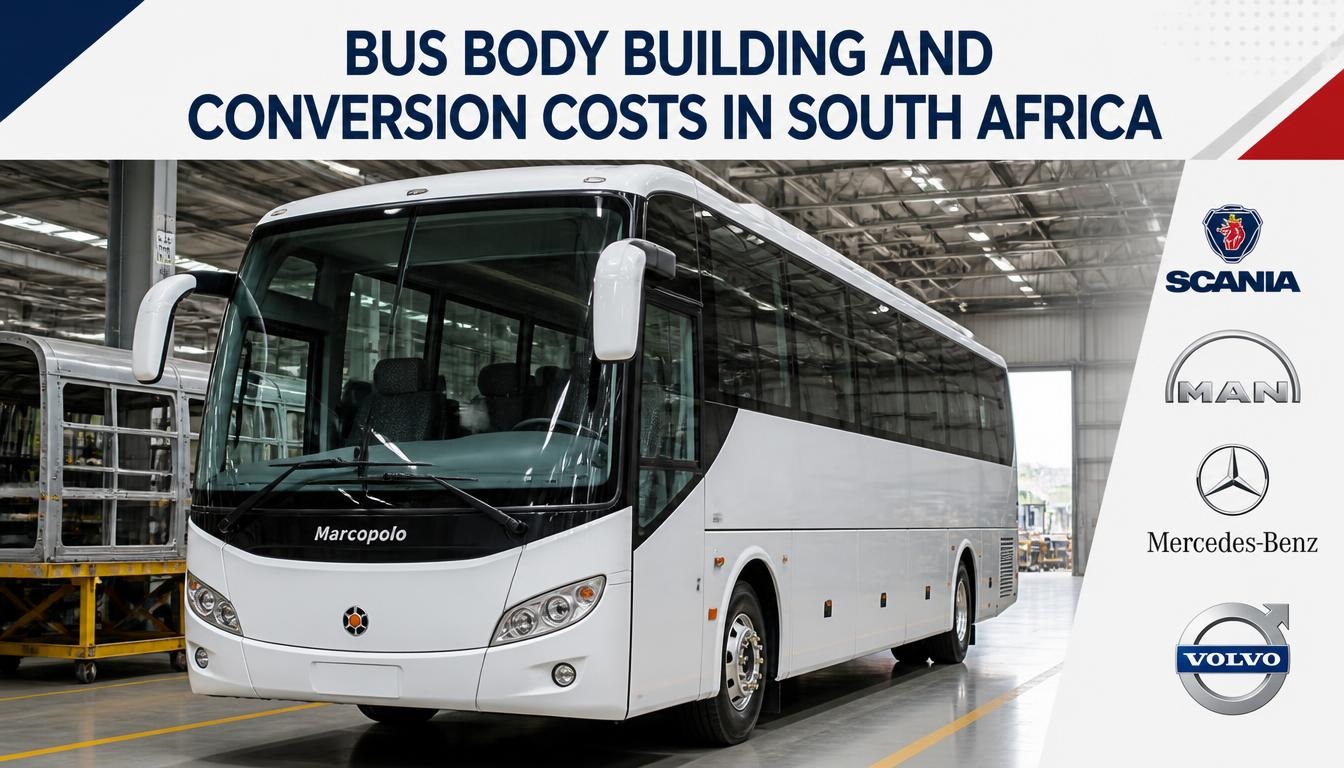
Whether you are launching an intercity passenger route, adding staff transport to your fleet, or building an off-grid overland motorhome to explore the Western Cape, commercial bus conversions and custom body builds carry major financial traps. Naive buyers often face budget overruns exceeding 30% due to unbudgeted 15% VAT, structural homologation hurdles, local assembly markups, and component import duties.
Quick Take: SA Price & Value Breakdown
-
Expected Price Range: R180,000 – R2,800,000 ZAR (15% VAT Included)
-
Top Overall Pick: 22–28 Seater Commuter Body on Isuzu/Hino Chassis — R650,000 – R980,000
-
Best Budget Alternative: Standard Panel Van to Passenger Conversion — R180,000 – R320,000
-
Critical SA Buyer Warning: Never pay a deposit before verifying the builder’s National Regulator for Compulsory Specifications (NRCS) builder registration and Letter of Authority (LOA). Without these documents, your vehicle cannot be legally registered on eNaTIS.
The Commercial Reality: Custom Bus Bodies vs. Van Conversions
Commercial vehicle modifications in South Africa split into two distinct engineering processes:
-
Custom Body Build: Constructing a complete coach body from scratch on a bare truck/bus chassis (e.g., Isuzu, Hino, MAN, Mercedes-Benz, or Scania).
-
Internal Van Conversion: Executing an internal retrofit inside an existing OEM panel van shell (e.g., Toyota Quantum, Ford Transit, or Mercedes-Benz Sprinter).
Build Cost Distribution
When building a body from scratch on a bare chassis:
-
60% of Budget: Goes toward structural steel framing, fiberglass roof caps, panelling, and rollover safety protection (ECE R66).
-
40% of Budget: Covers interior fitments (seating, HVAC/air conditioning, audio/infotainment, and parcel shelves).
SA Commercial Bus Body Building & Conversion Cost Table
Prices listed below represent realistic market averages from accredited local coachbuilders (e.g., Busmark, Marcopolo SA, and independent conversion specialists in Gauteng and the Western Cape). All figures include 15% South African VAT.
| Conversion / Body Type | Base Platform Required | Turnaround Time | Estimated Cost (ZAR) |
| 14 to 22-Seater Commuter Conversion | OEM Panel Van (Transit / Sprinter / Quantum) | 3 – 5 Weeks | R180,000 – R290,000 |
| 23 to 35-Seater Semi-Luxury Body | Isuzu / Hino / Front-Engine Chassis | 8 – 12 Weeks | R650,000 – R1,050,000 |
| 60 to 65-Seater High-Capacity Bus Body | MAN / Scania / Mercedes 4×2 Chassis | 10 – 16 Weeks | R1,250,000 – R1,850,000 |
| Full Luxury Intercity Coach (50-60 Seater) | Volvo / Scania 6×2 Tag-Axle Chassis | 14 – 20 Weeks | R2,100,000 – R2,800,000+ |
| Off-Grid Motorhome / Camper Bus | Used Bus / Panel Van Shell | 6 – 14 Weeks | R350,000 – R850,000 |
*Note: Costs cover body construction, interior fitouts, electrical wiring, spray painting, and NRCS compliance certification. Base chassis prices are excluded unless specified.
Detailed Cost Breakdown: Steel, Aircon, and Interior Spec
To avoid unexpected cost escalation during production, break down your quotation into its four major components:
1. Structural Shell & Rollover Protection (ECE R66)
-
Tubing & Frame: SA coachbuilders use mild steel or stainless steel square tubing. Mild steel is cheaper upfront but requires hot-dip galvanizing or heavy anti-corrosion primer to survive coastal rust in KZN and the Western Cape.
-
Cladding: Chromadek side panels paired with molded fiberglass front and rear caps. Replacing damaged Chromadek panels costs R4,500 – R7,500 per section in local repair yards.
-
Certification: NRCS structural testing for ECE R66 rollover compliance costs builders upwards of R45,000 per vehicle class. Ensure this fee is amortized into your quote rather than billed as a surprise disbursement.
2. Seating & Passenger Layouts
-
Commuter Vinyl Seats: Basic fixed bench or individual high-back vinyl seats cost R1,800 – R2,800 per seat position installed.
-
Semi-Luxury Recliners: Covered in heavy-duty woven fabric with lap safety belts cost R3,500 – R5,500 per seat.
-
Full Luxury Leather Seats: Fitted with integrated 3-point seatbelts, USB charging ports, and folding armrests range from R6,500 – R11,000 per seat position.
3. Thermal Insulation & HVAC (Air Conditioning)
Standard panel vans and thin steel bus bodies quickly turn into ovens under the African sun.
-
Insulation: Spray-foam insulation or polyester acoustic batting costs roughly R15,000 – R35,000 depending on body length.
-
Rooftop HVAC: Retrofitting a 14kW – 26kW rooftop air conditioning unit (Sutrak, Webasto, or Carrier) costs between R85,000 and R175,000. Running an under-powered aircon leads to constant compressor failures during high-ambient summer routes in Limpopo or the Northern Cape.
4. Electrical Systems & Off-Grid Battery Setups
For motorhome and camper bus conversions, power systems dictate the final price tag:
-
Basic Dual-Battery Setup: 100Ah AGM battery, DC-to-DC charger, and basic wiring: R18,000 – R28,000.
-
Off-Grid Lithium/Solar System: 5kVA Victron/Sunsynk inverter, 10kWh LiFePO4 battery bank, and 1.2kW roof-mounted solar array: R95,000 – R160,000.
The Regulatory Paperwork Trap: NRCS, eNaTIS & CPA Rights
Building or converting a bus in South Africa without strict adherence to road traffic legislation leaves you with an impound-risk asset.
-
NRCS Builder Registration & Letter of Authority (LOA): Any company altering a vehicle structure or adding seats must be registered as an M2/M3 vehicle builder with the National Regulator for Compulsory Specifications (NRCS). Never accept a quote without verifying the builder’s MIB (Manufacturer, Importer, Builder) registration number. Upon completion, the builder must issue a Letter of Authority (LOA)—without it, municipal testing stations will reject eNaTIS registration.
-
Roadworthy & Weighbridge Certificates: Altering a chassis changes its Tare mass. Once completed, the vehicle must go to an accredited weighbridge (cost: R350 – R600) to establish its new licensing weight, followed by an official COF (Certificate of Fitness) test at a vehicle testing station (R600 – R950).
-
CPA Protections vs Commercial Guarantees: Under the Consumer Protection Act (CPA), private individuals and small businesses (annual turnover below R2 million) enjoy a 6-month implied warranty against structural defects. Ensure your contract specifies:
-
Structural body warranty: Minimum 2 Years / Unlimited km.
-
Paintwork against blistering/rust: Minimum 3 Years.
-
Interior fitments/aircon: 12 Months manufacturer warranty.
-
Frequently Asked Questions (FAQs)
How long does a full bus body build or conversion take in South Africa?
A standard panel van passenger conversion (adding seats, windows, and flooring) takes 3 to 5 weeks. A custom 35 to 65-seater bus body built onto a bare chassis takes 8 to 16 weeks, depending on builder backlog and component imports.
Can I buy a used commuter bus and convert it into a campervan myself?
Yes, but you must update the vehicle structural category on eNaTIS from passenger (M2/M3) to motorhome/caravan status. You will need a weighbridge certificate, a SAPS clearance certificate if structural chassis modifications were made, and a fresh Roadworthy Certificate (COF) for insurance coverage.
What is the difference between a parallel (gray) chassis and an official local agent chassis?
Official local agent chassis (purchased via Isuzu SA, Hino SA, Scania SA, or MAN SA) come with full factory warranties and local service network support. Parallel/gray imports lack local software support, engine mapping for SA’s high-sulfur diesel, and official warranty cover.
Do bus body prices include 15% South African VAT?
Legally, all commercial consumer quotes issued in South Africa must state whether 15% VAT is included. Always request an itemized tax invoice showing the builder’s VAT registration number to claim input VAT back through SARS.

Joseph Mathebula is a consumer analyst and market researcher at Prices in South Africa. He specializes in tracking local service costs, retail pricing, and travel budgets, helping everyday shoppers navigate the market to secure the best value.