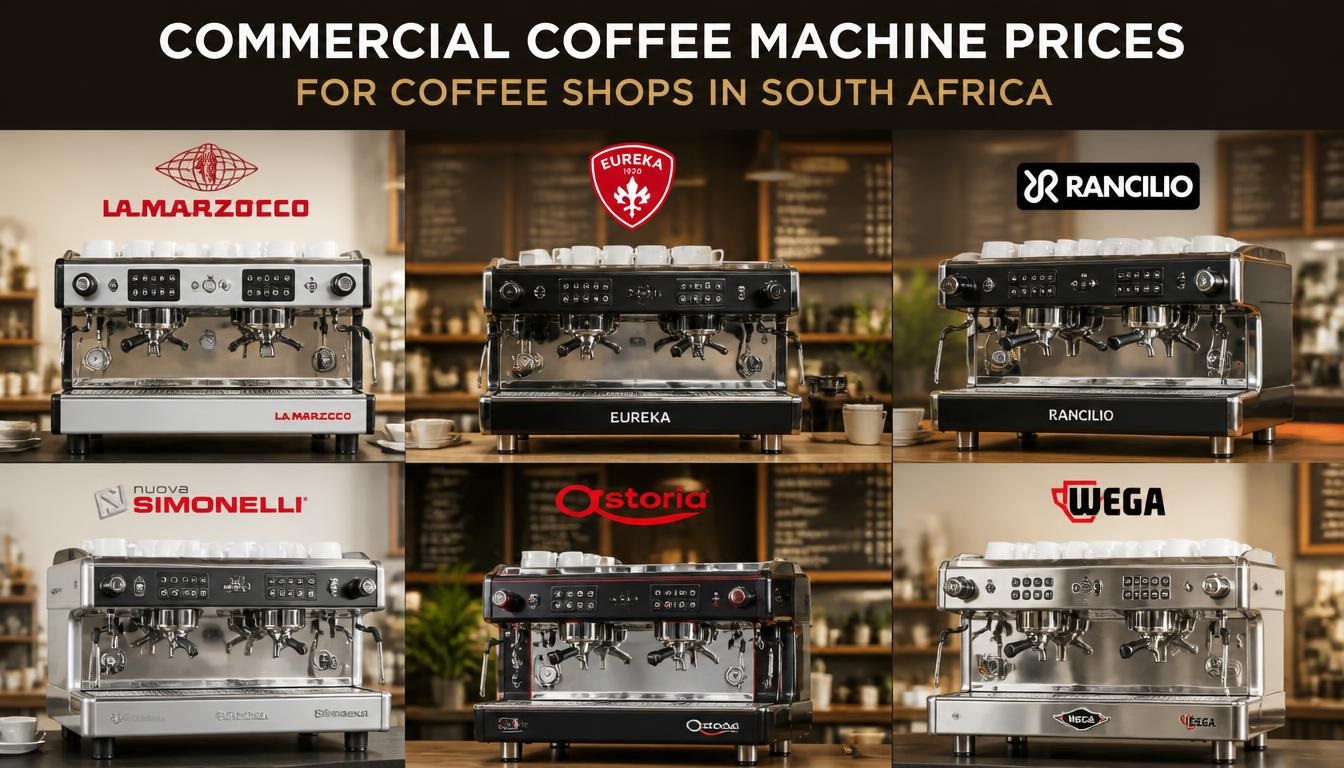
Quick Take: Setting up a coffee shop or expanding your daily extraction volume in South Africa requires balancing raw ZAR capital outlay against machine longevity, local importer backing, and power draw stability. Expect entry-level single-group setups to start around R35,000, robust two-group commercial espresso workhorses to run between R55,000 and R170,000, and high-volume, multi-boiler flagships to exceed R300,000.
-
Top Overall Commercial Pick: Nuova Simonelli Appia Life 2-Group – Check Price on Heavenly Coffees
-
Best Low-Volume / Boutique Pick: Nuova Simonelli Oscar Mood / Appia Compact – View Option at Buna Coffee
-
High-Volume Specialty Pick: La Marzocco Linea Classic S – View Deal at Buna Coffee
-
Critical SA Buyer Warning: Never import non-certified gray-market espresso machines directly to save 10%. Local municipal water conditions (high TDS and limescale in GP and KZN, acidic soft water in the Western Cape) paired with load-shedding surges will void overseas warranties. Ensure your machine includes an accredited South African local warranty and local technical backup.
Starting or running a coffee shop in South Africa comes with a stark reality: commercial coffee machine prices represent one of your largest single capital expenses (CapEx). While equipment suppliers aggressively promote retail listing figures, the true landed price tag includes 15% VAT, dedicated water filtration systems, commercial espresso grinders, and installation compliance.
Estimated Commercial Setup Budget Breakdown (ZAR):
-
Machine Base Unit: R55,000 – R170,000
-
On-Demand Commercial Grinder: R12,000 – R35,000
-
Water Softener & Filtration: R4,500 – R12,000
-
Plumbing & Installation Line: R2,500 – R5,000
A common mistake made by new cafe owners is buying high-end domestic “prosumer” machines—like a base De’Longhi or lower-tier home unit—to run a commercial counter. Residential single-boiler systems lack thermal mass. When pulling 40 to 60 double shots an hour during a morning commuter rush, a domestic boiler drops temperature rapidly, causing sour under-extracted shots and steam pressure failure.
To run a compliant, profitable operation under South Africa’s Consumer Protection Act (CPA) standards, you require commercial-grade dual-boiler or heat-exchanger architecture rated for continuous thermal recovery.
2026 Commercial Coffee Machine Price Benchmark Table
Here is a side-by-side comparison of commercial coffee machines available across major South African importers and retail platforms, covering compact 1-group models up to high-volume 3-group commercial beasts.
| Machine Category & Model | Expected Price Range (ZAR incl. VAT) | Target Daily Volume | Recommended Retailer / Importer | Direct Purchase / Listing |
|
Compact Single-Group
Nuova Simonelli Oscar Mood
|
R35,900 – R42,000 | 30–60 Cups / Day | Buna Coffee | View Model at Buna Coffee |
|
Small Cafe / Boutique
Nuova Simonelli Appia Life Compact 2G
|
R57,500 – R68,000 | 80–150 Cups / Day | Buna Coffee / Heavenly Coffees | Check Price at Buna Coffee |
|
Standard Workhorse
Nuova Simonelli Appia Life Standard 2G
|
R82,900 – R95,000 | 150–250 Cups / Day | Heavenly Coffees | Check Price at Heavenly Coffees |
|
Specialty High-Volume
La Marzocco Linea Classic S 2-Group
|
R168,900 – R190,000 | 250–500+ Cups / Day | Buna Coffee | View Deal at Buna Coffee |
|
Flagship Multi-Boiler
La Marzocco KB90 / Leva X Series
|
R248,000 – R400,000+ | High-Speed Specialty / Chain | Buna Coffee | View Listing at Buna Coffee |
|
Automatic Bean-to-Cup Commercial
Jura Commercial W8 / Giga Series
|
R34,900 – R65,000 | Office / Self-Serve Cafe | Takealot / Heavenly Coffees | Order via Takealot |
Machine Performance Under South African Operating Conditions
Commercial hardware operated in South Africa faces unique operational challenges that European or American buyers rarely encounter. Evaluating hardware means accounting for power grid fluctuations, regional water chemistry, and local servicing networks.
Load-Shedding & Power Protection Dynamics
A standard 2-group commercial espresso machine pulls between 3,000W and 5,000W (15A to 25A dedicated lines). Heating large 10L to 14L brass or stainless steel boilers requires massive surge currents when power restores post-load-shedding.
-
Element Burnout Risk: If utility power drops while the machine is actively pulling water, dry-element firing can burn out your heating elements within minutes of power restoration.
-
Protection Requirement: You must fit a dedicated high-amp surge protection plug (or hardwired inline isolator) and ensure your machine’s electronic control box is wired into a clean UPS bypass if running off a hybrid generator/inverter backup system.
Water Quality Across SA Provinces
Water quality varies significantly across South Africa, directly impacting machine life and shot consistency:
-
Gauteng & Inland: High mineral content (TDS) and heavy calcium carbonate lead to scale build-up. Without an inline multi-stage water softening cartridge (such as BWT or Everpure), scale will choke your machine’s 0.6mm gigleurs and scale up heating elements within 6 months, voiding your local warranty.
-
Western Cape: Soft, acidic water accelerates brass boiler corrosion and metal leaching if pH levels drop below 6.8. Remineralization filtration setups are essential to maintain shot extraction standards and preserve internal copper/brass pipework.
Standard Water & Power Signal Flow:
Municipal Water Line ➔ Multi-Stage Water Softener ➔ High-Amp Surge Isolator ➔ Commercial Espresso Machine
Commercial Buying vs. Leasing in South Africa
For local businesses, deciding between buying a commercial espresso machine outright or signing a rental/lease agreement impacts initial cash flow and long-term operating costs.
Outright Purchase (CapEx)
Purchasing your machine directly (via EFT, corporate credit card, or commercial capital funds) gives you full asset ownership from day one.
-
Pros: Lower lifetime cost, fully claimable depreciation via SARS tax allowances, freedom to source coffee beans from any roaster without contract lock-ins.
-
Cons: High upfront capital requirement (R70,000 – R180,000 for machine and grinder), full financial responsibility for out-of-warranty maintenance and replacement parts.
Commercial Equipment Leasing (OpEx)
Leasing through SA coffee equipment distributors or finance houses allows you to pay a fixed monthly ZAR fee over 24 to 36 months.
-
Pros: Minimal upfront capital required, monthly lease payments are 100% tax-deductible operational expenses, built-in service level agreements (SLAs) with free loan machines during breakdowns.
-
Cons: Higher total financial cost over time, potential contractual obligations to purchase roaster-specific coffee beans at premium per-kilogram prices.
Smart SA Purchasing Strategy: Sales Cycles & Asset Recovery
Savvy commercial buyers in South Africa leverage local retail events and asset disposal cycles to reduce equipment costs.
-
Fiscal Year-End Equipment Sales (February & March): Commercial hospitality importers flush old stock models before the end of the financial tax year to minimize inventory taxes. Look out for discounted demo models from major suppliers during this window.
-
Black Friday & Cyber Week (November): Platforms like Takealot and commercial kitchen equipment suppliers clear out commercial grinders, automated bean-to-cup office units, and water filtration hardware at reduced ZAR prices.
-
Refurbished Commercial Assets: Buying a certified, pre-owned 2-group machine that has undergone a complete group head overhaul, scale descaling, and pump rebuild can cut initial equipment costs by 30% to 50%. Always request a bench-test certificate from a certified technician before finalizing payment.
Frequently Asked Questions
What CPA rights protect commercial coffee machine purchases in South Africa?
If purchasing as a natural person or a legal entity with an annual turnover/asset value under R2 million, your purchase is protected under the Consumer Protection Act (CPA). This includes an implied 6-month warranty against factory defects. However, if your turnover exceeds R2 million, commercial transactions fall under standard contractual law, making supplier-provided warranties and explicit SLA terms critical.
Why do local suppliers require professional installation for warranty validity?
Commercial espresso machines must be plumbed directly into mains water lines with specific pressure regulation (typically 2 to 3 bar inlet pressure) and wired into compliant electrical supply points. Incorrect installation can result in pump cavitation, thermal overload, or electrical shorting. Importers require installation sign-offs by accredited technicians to validate warranty coverage.
What is the expected lifespan of a commercial espresso machine in SA?
With routine preventative maintenance—including backflushing, quarterly group gasket replacements, annual water filter changes, and regular descaling—a commercial workhorse from established Italian brands like Nuova Simonelli or La Marzocco routinely lasts 8 to 15 years in active service.
Community Discussion & Local Price Tracking
Are you currently setting up a coffee shop, upgrading your commercial roastery bar, or comparing commercial quotes across South African suppliers?
Share your recent equipment quotes, local technician experiences, or stock findings in the comments below. Let us know which machines you are evaluating and your experience with regional water conditions in your municipality.
Disclaimer: Prices fluctuate and reflect independent market research at the time of publication. We may earn a small affiliate commission through retailer links at no extra cost to you.

Joseph Mathebula is a consumer analyst and market researcher at Prices in South Africa. He specializes in tracking local service costs, retail pricing, and travel budgets, helping everyday shoppers navigate the market to secure the best value.