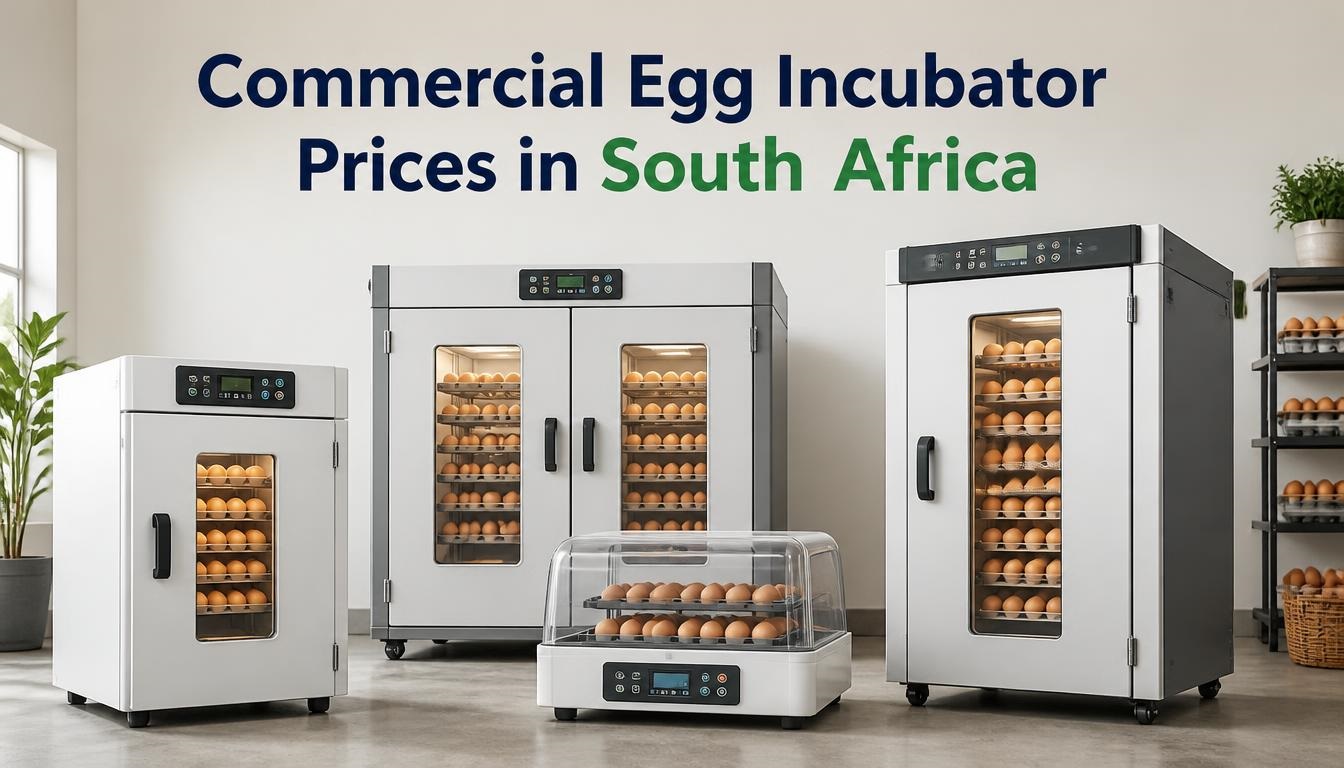
Running a poultry operation in South Africa isn’t for the faint of heart. Between feed price spikes, unstable municipal power grids, and local suppliers passing 15% VAT jumps directly to the farmer, buying commercial egg incubators can easily turn into a financial pitfall. If you are calculating the entry cost for a 180-egg setup or scaling up to a 2,000-egg commercial incubator hatcher combo, picking the wrong model for local power and humidity realities will ruin your hatch rates and burn your profit margins.
Quick-Answer Price Summary (2026 ZAR Market Rates)
2026 Price Comparison: South Africa Commercial Incubators
The local market spans imported dual-voltage desktop units to heavy-duty local cabinet hatchers. The table below outlines real market prices across major local suppliers, accounting for VAT status and delivery logistics.
| Brand / Model | Capacity (Chicken Eggs) | Current ZAR (R) Price | VAT Included? | Stock / Delivery | Value Rating | Direct Purchase Link |
| Delta Dual-Voltage Blue Diamond | 240 Eggs | R5,799.00 | Yes (15%) | Courier Guy / Pargo | 4.2 / 5 | View Deal on Makro |
| Pleysier Automatic Series | 112 Eggs | R3,395.00 | Yes (15%) | Takealot Pickup / Home | 4.0 / 5 | Check Price on Takealot |
| Surehatch Digital SH560 | 560 Eggs | R16,100.00 (R14,000 ex. VAT) | No (Listed Excl.) | Freight / Factory Collect | 4.8 / 5 | Check Specs at Surehatch |
| Surehatch Cabinet SH1000 | 1,000 Eggs | R34,500.00 (R30,000 ex. VAT) | No (Listed Excl.) | Freight Courier | 4.7 / 5 | View Deal at Surehatch |
| Incubators Africa Commercial | 2,000 Eggs | R37,500.00 | Yes (15%) | Heavy Freight Courier | 4.6 / 5 | Order at Incubators Africa |
| Surehatch Commercial Hatchery SH6000 | 6,000 Eggs | R109,250.00 (R95,000 ex. VAT) | No (Listed Excl.) | Special Transport | 4.9 / 5 | Contact Supplier at Surehatch |
When you browse local listings, it is easy to fall for seemingly low baseline prices. A unit advertised at R30,000 can quickly reach R42,000 by the time it reaches your farm.
Real Landed Cost Breakdown Example:
-
Advertised Base Price: R30,000 (Excl. VAT)
-
15% South African VAT: + R4,500
-
Heavy Freight Delivery: + R1,800 to R3,500
-
Pure Sine-Wave Inverter: + R4,200
-
200Ah Lithium Backup: + R7,500
-
Total True Startup Cost: R48,000 – R49,700
1. The 15% VAT Trap
Many industrial machinery distributors list prices excluding VAT to look more competitive on search engines. Always check whether the quote includes South Africa’s 15% VAT. On a R34,000 industrial incubator, VAT adds R5,100 to your final invoice. Retail platforms like Takealot and Makro must list VAT-inclusive prices by law, making direct price comparisons tricky.
2. High-Volume Freight & Delivery Surcharges
Commercial hatchers weighing between 60kg and 300kg exceed standard courier limits. While a small 52-egg unit costs around R150 – R250 via The Courier Guy or standard Pargo pickup points, shipping a 2,000-egg cabinet incubator from Gauteng to the Western Cape or Eastern Cape can add R1,500 to R4,000 in freight charges.
3. Load-Shedding & Power Protection Upgrades
A 2-hour power drop during days 18–21 of incubation can kill an entire batch of embryos.
-
Heating Element Load: Commercial units consume 900W to 2,500W when the heating element kicks in.
-
Inverter Requirements: You cannot run sensitive digital PID temperature controllers on cheap modified sine-wave inverters. Budget for at least a 2kW Pure Sine-Wave Inverter system paired with a 200Ah Lithium (LiFePO4) battery, adding roughly R10,000 to R15,000 to your operational setup.
-
Dual-Voltage Systems: Models featuring integrated 12V battery clips automatically switch to deep-cycle battery power when main grid power cuts out, saving you from buying a costly dedicated inverter setup.
Evaluating Local Commercial Incubator Performance Under SA Conditions
South African climate conditions vary dramatically by region. A cabinet incubator that works well in mild coastal humidity will perform differently in dry interior locations like the Karoo or Free State during winter.
Cabinet Insulation & Thermal Retention
-
Plastic & Metal Sheet Shells: Budget imported units use thin sheet metal or molded plastic shells. They leak heat rapidly during cold highveld nights, forcing internal heating elements to run constantly and driving up prepaid electricity bills.
-
Insulated Sandwich Panels: Premium setups like Surehatch commercial units use heavy insulation and structural timber or composite walls. These maintain internal ambient temperatures far better during power cuts, holding micro-climates steady for up to 3 to 4 hours without power.
Automatic Turning Mechanisms vs. Micro-Dust Dust Storms
Dust and feathers can wear out delicate plastic egg-turning gears.
-
Roller Trays: Great for mixed poultry (chickens, ducks, quails), but small seeds and feathers can jam the rollers.
-
Industrial Cradle Rockers: Heavy-duty commercial units utilize external motor-driven chain/arm tilt trays (45 degrees left/right). These handle dust much better and require lower maintenance in working farm environments.
Smart Buying Strategies: Lay-by, Financing, and Loyalty Rewards
Buying mid-tier or industrial poultry equipment requires capital. Here is how local farmers finance these purchases while maximizing store perks:
-
Use Retailer Financing Apps: If buying through commercial outlets, services like PayFlex, PayJustNow, and Mobicred let you split smaller commercial purchases (under R15,000) into zero-interest installments over 3 to 4 months. This structure allows you to launch your first batch before paying off the hardware.
-
Maximize Loyalty Programs: Buying a R9,000 incubator deal on Makro using an Absa Rewards card or paying via eBucks on Takealot can return 1% to 15% back in spendable rewards points. That cashback can cover your initial brood lights, drinkers, and chick starter feed.
-
Watch Local Agricultural Sale Cycles: Local suppliers run major promotions during peak agricultural buying periods—specifically August/September (spring breeding season) and Black Friday in November. Historical price drops during these windows range from 10% to 25% off base retail prices.
Consumer Rights, Warranties, and Local Repair Realities
The Consumer Protection Act (CPA) gives South African buyers strict protections, but you need to know how suppliers handle agricultural equipment claims:
-
The 6-Month CPA Default Warranty: Under Section 56 of the CPA, every new incubator sold in SA carries an implied 6-month warranty against manufacturing defects. If the digital thermostat fails within six months through no fault of your own, you are legally entitled to a repair, replacement, or full refund.
-
Spares Availability: Avoid unbranded grey-import incubators that lack local spare parts. Look for brands that stock replacement heating elements, PID controllers, humidity sensors, and turning motors locally in South Africa. If a heating element burns out on Day 10, waiting three weeks for an overseas shipment will ruin your entire batch.
-
Surge Damage Exclusions: Note that almost all local supplier warranties explicitly exclude damage caused by power surges, lightning spikes, or municipal voltage fluctuations. Always install a dedicated Ellies Surge Protector Plug (minimum 16A rated) between your wall outlet and incubator power cord.
Frequently Asked Questions by SA Poultry Buyers
Q1: How much electricity does a 1,000-egg commercial incubator use per month in South Africa?
A 1,000-egg cabinet incubator runs an average power draw of roughly 350W to 600W once warmed up, running 24 hours a day for 21 days. At average municipal prepaid tariffs (approx. R2.80 – R3.50 per kWh), running one cycle costs around R600 to R950 in electricity, depending on ambient room temperatures and how well the cabinet is insulated.
Q2: Can I legally return a faulty commercial incubator to online stores like Takealot or Makro under the CPA?
Yes. Under the SA Consumer Protection Act and standard store return policies, if the item is defective or does not perform as advertised, you can return it within the standard 30-day store window or trigger a CPA warranty claim within 6 months. Make sure you retain the original packaging and prove the fault was not caused by power surges.
Q3: Is it better to buy a combined Incubator/Hatcher or separate units?
For commercial hatcheries running continuous cycles (setting eggs weekly), separate setter and hatcher units are vastly superior. Hatching eggs produce high humidity, downy fluff, and bacteria that contaminate the clean setting environment. However, if you hatch in single batches every 21 days, a combined combo unit saves initial setup capital.
Are you running poultry setups in South Africa? Have you recently bought equipment from Surehatch, Incubators Africa, Makro, or Takealot? Share your local hatch rates, power setup hacks, or recent store quotes in the comments below to help fellow local farmers navigate market costs!
Disclaimer: Prices fluctuate based on exchange rates and reflect independent market research at the time of publication. We may earn a small affiliate commission through retailer links at no extra cost to you.

Joseph Mathebula is a consumer analyst and market researcher at Prices in South Africa. He specializes in tracking local service costs, retail pricing, and travel budgets, helping everyday shoppers navigate the market to secure the best value.