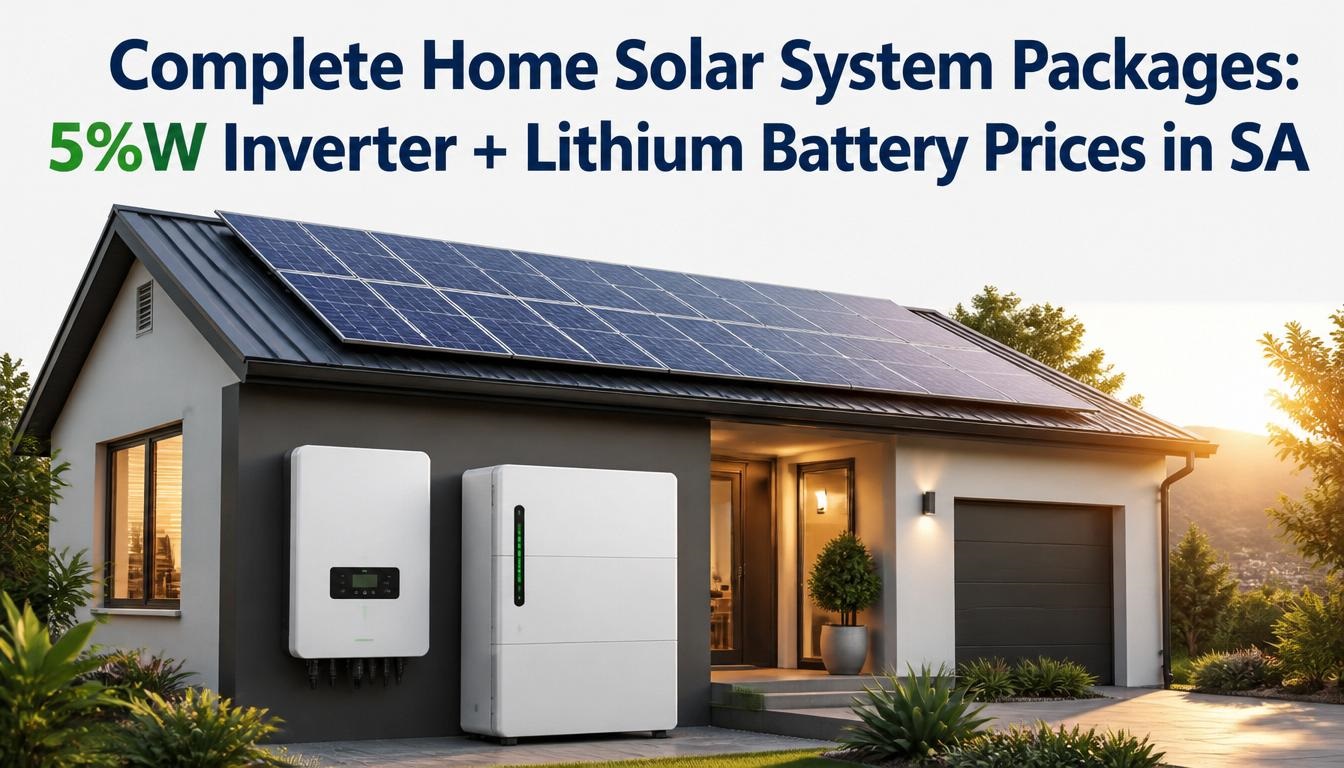
Remember the exact morning Eskom announced yet another crippling tariff hike while stage-four load shedding hummed quietly in the back of your mind? If you are sitting in Johannesburg, Durban, or Cape Town right now, chances are you are tired of playing Russian roulette with municipal power grids. As a South African tech and energy analyst who has crawled through dozens of roof spaces, tested hybrid inverters under heavy inductive loads, and tracked currency-driven price fluctuations, I can tell you one thing: a 5kW inverter paired with a lithium battery remains the absolute sweet spot for the average South African household.
It is the undisputed champion of residential backup power. But with hundreds of suppliers throwing around confusing bundles, mismatched components, and hidden installation fees, finding value for money is harder than ever. This guide cuts through the marketing fluff, details current market pricing, and gives you the raw, unvarnished truth about building a resilient home solar system in South Africa.
Why a 5kW Inverter and 5.1kWh Lithium Setup is the South African Standard
When load shedding first crippled our economy, homeowners rushed out to buy cheap lead-acid batteries and loud petrol generators. That experiment failed expensively. Today, the modern South African household requires an intelligent hybrid system that can handle grid instability, lower monthly municipal bills, and seamlessly integrate solar panels when budget permits.
A 5kW (or 5kVA) hybrid inverter provides roughly 5,000 watts of continuous power. In real terms, this means you can run your lights, Wi-Fi router, TV, security systems, fridge, and even a modern inverter-based air conditioner or microwave simultaneously—provided you manage your heavy loads.
Coupled with a standard 5.12kWh lithium-ion (LiFePO4) battery, you have enough stored capacity to survive a standard two-to-four-hour power outage without plunging your house into darkness, while retaining the flexibility to discharge safely down to 20% or 10% capacity without degrading the chemistry.
Current South African Pricing Breakdown (2026 Market Data)
Prices fluctuate based on the rand-dollar exchange rate, shipping costs, and Tier-1 brand popularity (such as Deye, Sunsynk, Luxpower, Dyness, and Freedom Won). Below is an accurate reflection of what you should expect to pay for equipment-only bundles versus fully installed turnkey solutions with a Certificate of Compliance (CoC).
Table 1: Popular 5kW Inverter & Lithium Battery Hardware Combos (Excl. Installation)
| Brand Combination | Components Included | Typical Market Price (ZAR) | Best Suited For |
| Luxpower + Dyness Combo | Luxpower SNA5000 5kW Inverter + Dyness BX51100 5.12kWh Battery | R33,500 – R35,800 | Budget-conscious homeowners wanting reliable hybrid features. |
| Deye Entry-Level Package | Deye 5kW Hybrid Inverter + HinaESS or Freedom-compatible 5.12kWh Battery | R42,000 – R45,500 | Seamless integration, robust mobile app monitoring, and generator port support. |
| Sunsynk Premium Kit | Sunsynk 5kW Hybrid Inverter + Sunsynk / Dyness 5.32kWh Wall-mount Battery | R46,000 – R52,000 | Premium performance, top-tier installer preference, and 10-year warranties. |
| Full Solar Panel Bundle | 5kW Inverter + 5.1kWh Battery + 6 to 8 x 550W Tier-1 Solar Panels + Structure | R55,000 – R65,000 | Households looking to generate their own daytime power immediately. |
Real Human Experience: What Installers Won’t Tell You
Back in my own home in Gauteng, I installed a 5kW hybrid setup back during the peak grid instability era. Let me share a few hard-earned lessons that spec sheets leave out:
-
The Surge Trap: A 5kW inverter is rated for 5,000 continuous watts, but look closely at your appliance startup surges. A borehole pump or an old-school pool pump can pull triple its running wattage for a split second when kicking on. If your inverter doesn’t support a high surge coefficient, your whole system will trip into error mode right when you need it most.
-
Firmware and Monitoring: Do not buy an off-brand inverter just to save R3,000. Brands like Deye and Sunsynk have active local South African support networks, easily downloadable firmware updates, and apps that don’t crash every time Eskom drops a substation.
-
The Expansion Illusion: Salesmen love to say, “You can just add another battery later!” While technically true, mixing lithium batteries of different ages or varying state-of-charge chemistries can cause balancing issues. If you think you’ll need 10kWh of storage within two years, try to budget for it upfront or buy matching modules from day one.
Complete Turnkey Solutions: Hardware vs. Professional Installation
Buying the boxes online is only half the battle. South African regulations—specifically the Occupational Health and Safety Act and local municipal bylaws—dictate that grid-tied or hybrid solar systems must be installed by a registered wireman electrician who can issue an official Electrical Certificate of Compliance (CoC). If you skip this, your insurance company can legally reject claims if an electrical fire occurs.
Table 2: Turnkey 5kW Solar System Investment Comparison
| Package Tier | What It Includes | Estimated Total Cost (Incl. VAT & Labor) |
| Essential Backup Only | 5kW Inverter, 5.1kWh Lithium Battery, DC/AC Protection Box, Cables, Installation & CoC | R48,000 – R55,000 |
| Standard Solar Hybrid Kit | Backup Kit + 6 x 550W Solar Panels + Roof Mounting Structure & Labor | R72,000 – R85,000 |
| Premium High-Yield Kit | Sunsynk/Deye 5kW Inverter, Premium Battery (e.g., Hubble/Sunsynk), 8–10 Panels, Full CoC | R88,000 – R98,000 |
How to Choose the Right Package for Your Home
To prevent overspending on equipment you do not need, or under-purchasing and leaving your family in the dark, evaluate your usage profile against these three questions:
-
Are you trying to beat load shedding or cut municipal bills? If your goal is purely backup, start with the inverter and a single 5.1kWh battery. If your goal is bill reduction, you must add at least 4kW to 5kW worth of solar panels on a north-facing roof.
-
What is your geyser situation? Never run an electric water geyser directly off a 5kW inverter; it will overload it instantly. Keep your geyser on a separate timer or switch it to a dedicated solar water heating setup.
-
Do you live in a coastal area? Salt spray in regions like Durban or parts of Cape Town wreaks havoc on inverter cooling fans and panel clamps. Ensure your chosen hardware carries proper IP ratings and marine-grade protective coatings.
Join the Discussion
Navigating the South African solar market can feel like walking through a minefield of conflicting quotes and technical jargon. Whether you are leaning toward a robust Deye setup or trying to figure out if your roof can handle eight heavy mono-facial panels, I want to hear from you.
What is the highest quote you’ve received from a local installer for a 5kW system, and which brand combinations were they pushing? Drop a comment below, and let’s break down whether you’re getting a genuine deal or being overcharged!

Joseph Mathebula is a consumer analyst and market researcher at Prices in South Africa. He specializes in tracking local service costs, retail pricing, and travel budgets, helping everyday shoppers navigate the market to secure the best value.