If you are standing at the kitchen crossroad, apron in hand, deciding whether to invest your life savings into a professional chef qualification, you already know the stakes. The South African culinary scene has exploded over the past decade. From Cape Town’s fine dining establishments dominating international lists to Gauteng’s thriving boutique catering sector, the industry demands rigorous skills.
However, entering this industry comes at a steep price tag. As someone who has analyzed South African private tertiary fees for over twelve years—tracking price inflations, material levies, and hidden institutional markups—I can tell you that culinary school fees are among the most opaque in the private education sector.
Many prospective students see a single headline price tag, only to be hit in term two by R15,000 in mandatory exam fees, R6,000 uniform and knife roll levies, or unexpected ingredient surcharges.
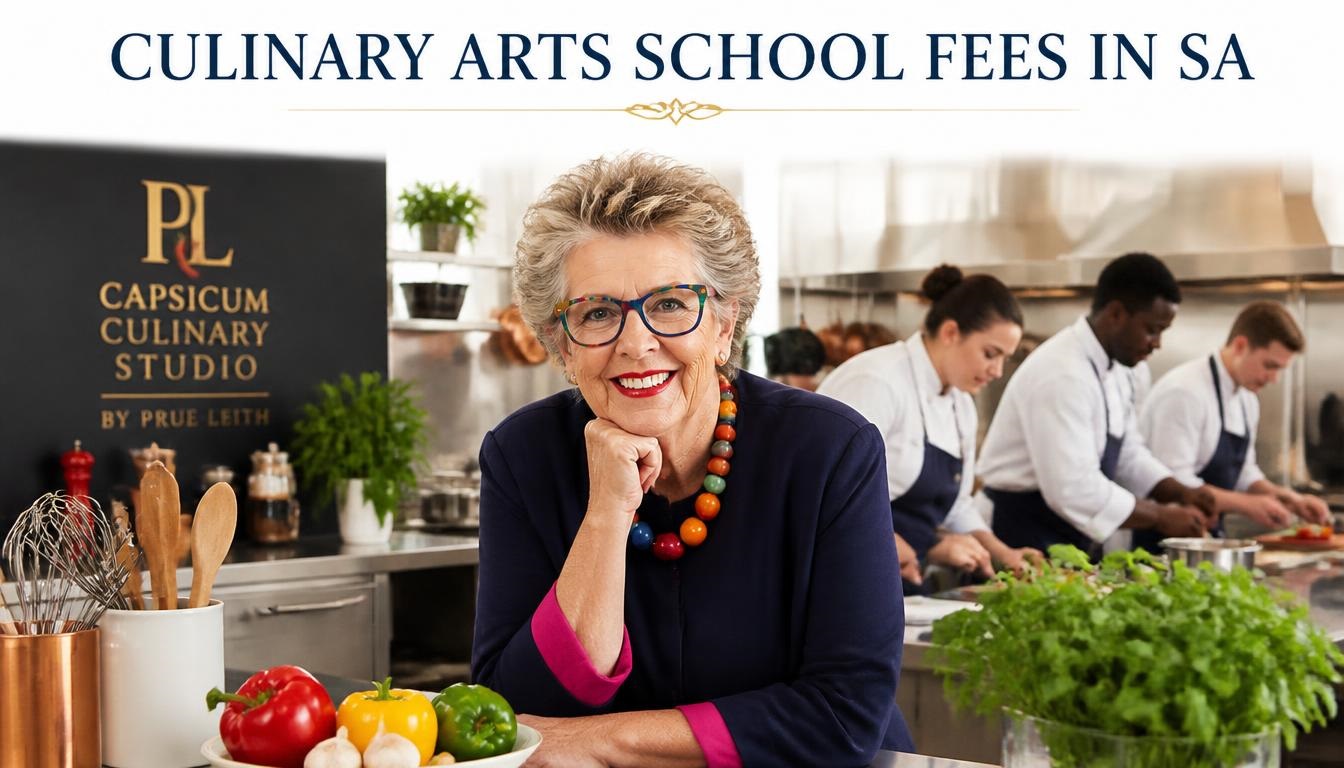
In this deep-dive cost analysis, we will deconstruct the true, all-in tuition fees for South Africa’s top two culinary powerhouses: Prue Leith Culinary Academy and Capsicum Culinary Studio. We will also break down the hidden costs, evaluate the realistic Return on Investment (ROI) in the local hospitality market, and examine alternative institutions like the International Hotel School (IHS) and Silwood School of Cookery.
1. Executive Summary: The True Cost of Culinary Education in SA
Before diving into granular fee breakdowns, here is an upfront high-level comparison of full-time professional culinary qualifications in South Africa.
Head-to-Head Tuition Overview
| Metric / Institution | Prue Leith Culinary Academy | Capsicum Culinary Studio | Silwood School of Cookery | International Hotel School (IHS) |
| Primary Flagship Course | Occupational Certificate: Chef (QCTO) / Diploma | Advanced Occupational Certificate: Chef | Grand Diploma in Culinary Arts | Higher Certificate / Diploma in Culinary Arts |
| Duration | 3 Years (Full-Time) / 18-Month Patisserie | 3 Years (Full-Time) or 1-Year Certificates | 3 Years (Full-Time) | 1 to 3 Years |
| Average Annual Cash Tuition | R85,000 – R115,000 | R75,500 – R110,000 | R90,000 – R120,000 | R70,000 – R95,000 |
| Estimated Total 3-Year Investment | R260,000 – R310,000 | R220,000 – R280,000 | R270,000 – R330,000 | R210,000 – R260,000 |
| Included in Base Fee | Practical ingredients, uniform, knife kit, local exam fees | Practical ingredients, uniform, basic knife roll | Ingredients, select uniforms | Ingredients, digital learning content |
| International Accreditation Cost | City & Guilds / ALMA add-ons optional/included | City & Guilds (Elective / Add-on fee) | Highfield Qualifications | City & Guilds / CTH |
| Primary Campus Locations | Centurion (Gauteng) | JHB (Rosebank, Ruimsig), PTA, Cape Town, Durban, Boksburg, NMB | Cape Town | Rosebank, Durban, Cape Town |
2. Prue Leith Culinary Academy: Fee Structure & Course Breakdown
Founded under the patronage of South African-born international culinary icon Dame Prue Leith, the Prue Leith Culinary Academy in Centurion, Gauteng, is widely considered the “gold standard” for classic culinary education in Southern Africa. Known for its hands-on approach and its famous fine-dining onsite restaurant, Prue Leith Restaurant, the academy commands premium pricing.
Full-Time Course Fee Structures
Prue Leith structures its fees around QCTO (Quality Council for Trades and Occupations) alignment and international certifications.
1. Occupational Certificate: Chef (3 Years Full-Time)
-
Target Career: Executive Chef, Head Pastry Chef, Kitchen Manager, Culinary Director.
-
Year 1 (Foundational & Professional Cookery): ~R95,000 – R108,000 cash price.
-
Year 2 (Advanced Cookery & Kitchen Operations): ~R88,000 – R98,000 cash price.
-
Year 3 (Specialized Applied Skills & Industrial Placement): ~R72,000 – R82,000 cash price.
-
Total Cash Price Estimate: R255,000 – R288,000 (Excluding monthly installment interest).
2. Professional Patisserie Qualification (18 Months Full-Time)
-
Target Career: Master Pastry Chef, Artisan Baker, Chocolatier.
-
Total Tuition Cost: R110,000 – R135,000.
-
Deposit Required: ~R30,000 upfront, with the remainder payable across 4 to 12 monthly terms.
3. ALMA Professional Chef of Italian Cuisine (19 Months)
-
Specialized Qualification: Run in partnership with ALMA, the world’s leading international educational center for Italian Cuisine in Parma, Italy.
-
Total Investment: R160,000 – R210,000 (Includes South African training module and optional Italian immersion/practicum costs).
Important Note on Prue Leith Installment Payments:
If you opt to pay Prue Leith tuition over a monthly payment plan rather than paying the upfront cash price, expect an effective price markup of 8% to 14% due to administration charges and finance fees.
What Is Included in Prue Leith Fees?
Unlike many lower-tier cooking schools that charge separately for basic equipment, Prue Leith’s base package covers:
-
Full professional knife set (Wüsthof or equivalent high-grade stainless steel roll).
-
Full branded chef uniforms (jackets, trousers, aprons, neckerchiefs, skull caps).
-
All raw ingredients for practical training modules.
-
Course manuals, theory textbooks, and online portal access.
-
WSET (Wine & Spirit Education Trust) Level 1 training integration.
3. Capsicum Culinary Studio: Fee Structure & Course Breakdown
Capsicum Culinary Studio is Southern Africa’s largest culinary school network, operating under the ADvTECH Group (a listed private education giant in South Africa). With campuses across Rosebank, Ruimsig, Pretoria, Cape Town, Durban, Boksburg, and Nelson Mandela Bay, Capsicum offers unmatched accessibility and scale.
Because of its scale, Capsicum provides modular, flexible pricing models ranging from entry-level foundational courses to 3-year professional chef programs.
Capsicum Official Fee Schedule Breakdown (2026/2027 Baseline Rates)
The table below outlines the core qualifications, registration fees, cash upfront costs, and monthly term payment structures across major campuses (Johannesburg, Pretoria, Cape Town).
| Qualification / Programme | Application Fee | Deposit (Upfront) | Single Cash Payment | Monthly Terms Option (Instalment Total) |
| Professional Chef Year 1 (Level 2 Diploma in Professional Cookery / QCTO Level 4) | R1,000 | R22,440 | R102,000 – R110,000 | R7,795 x 11 months (R108,180 – R116,710) |
| Professional Chef Year 2 (Level 3 Diploma in Patisserie & Confectionery) | R1,000 | R21,210 | R96,400 – R101,500 | R7,360 x 11 months (R102,175 – R107,795) |
| Professional Chef Year 3 (Level 3 Advanced Professional Cookery / QCTO Level 5) | R1,000 | R14,450 | R65,680 – R67,850 | R5,015 x 11 months (R69,620 – R71,970) |
| Professional Combination (Cookery + Pastry Combined – 24 Months) | R1,000 | R41,800 | R190,000 – R203,500 | R6,650 x 24 months (R201,400 – R215,760) |
| Foundational Cookery Programme (NQF Level 3 Kitchen Hand / Level 1 City & Guilds) | R1,000 | R8,375 | R33,500 | R4,565 x 6 months (R35,765) |
| Assistant Baker (NQF Level 2 Skills Programme) | R1,000 | R8,890 | R35,350 | R4,760 x 6 months (R37,450) |
Note: Regional campuses such as Boksburg, Durban (Umhlanga), and Nelson Mandela Bay (Gqeberha) often enjoy a slightly discounted pricing structure (approx. 5% to 10% lower cash rates) compared to the main metropolitan hubs of Rosebank and Cape Town.
When budgeting for a culinary degree in South Africa, focusing solely on tuition fees is the most common financial mistake students make. Here is an exhaustive breakdown of additional real-world expenses you must factor into your financial plan before signing an enrollment contract.
Real-World Secondary Expenses Breakdown
| Expense Item | Expected Cost Range (ZAR) | Is It Mandatory? | Notes & Industry Advice |
| Non-Refundable Application Fee | R1,000 | Yes | Due upfront upon application submission. |
| International Student Admin Fee | R3,000 – R4,500 | Conditional | Applied to non-SADC / international passport holders. |
| City & Guilds Exam/Registration | R4,500 – R8,500 per year | Optional/Recommended | International certification add-on fee. Essential if planning to work on yachts or overseas. |
| Trade Test / QCTO External Exam Fee | R2,500 – R4,500 | Yes (Final Year) | Required to receive official red-seal chef recognition in SA. |
| Replacement / Extra Uniform Items | R1,500 – R2,800 total | As needed | Jackets (~R500), Pants (~R405), Safety Shoes (~R450). |
| Specialized Knife Upgrades / Replacement | R2,000 – R6,000 | Optional | Base kits are provided, but advanced butchery/pastry work often requires custom knives. |
| Transport & Industry Internship Travel | R1,500 – R3,500 / month | Yes | Students complete unpaid shifts (in-service training) at hotels/restaurants. You cover your own commute. |
| Supplementary / Rewrite Fees | R150 – R525 per paper | Conditional | Re-writing practical assessments (~R350) or theory papers (~R150). |
5. Comparative ROI: Culinary School vs. Industry Salaries in SA
Is a R250,000 culinary qualification actually worth it in South Africa? Let’s examine the cold, hard numbers of the South African culinary job market.
Realities of Culinary Salaries in South Africa
Unlike engineering or accounting, entry-level culinary positions do not offer immediate high salary yields. The return on investment in the culinary world is deferred—realized 5 to 10 years into your career.
-
Commis Chef (Entry Level): R6,500 – R9,500 / month
-
Demi Chef de Partie: R9,500 – R13,500 / month
-
Chef de Partie (Section Leader): R13,500 – R19,500 / month
-
Sous Chef (Second-in-Command): R20,000 – R32,000 / month
-
Executive Chef: R38,000 – R75,000+ / month
-
Private / Superyacht Chef: R65,000 – R140,000+ / month (Earned in Foreign Currency)
Comparative Salary Structure Table
| Career Stage / Position | Average Monthly Gross Salary (ZAR) | Est. Years of Experience | Expected Annual Salary (ZAR) |
| Commis Chef (Junior) | R6,500 – R9,500 | 0 – 2 Years | R78,000 – R114,000 |
| Demi Chef de Partie | R9,500 – R13,500 | 2 – 4 Years | R114,000 – R162,000 |
| Chef de Partie (Section Leader) | R13,500 – R19,500 | 3 – 6 Years | R162,000 – R234,000 |
| Sous Chef (Second-in-Command) | R20,000 – R32,000 | 5 – 9 Years | R240,000 – R384,000 |
| Head / Executive Chef | R38,000 – R75,000+ | 8+ Years | R456,000 – R900,000+ |
| Private Safari Lodge Chef | R22,000 – R45,000 (Incl. Board) | 4+ Years | R264,000 – R540,000 |
| Superyacht / International Chef | $3,500 – $8,000 USD (~R63,000 – R144,000) | 3+ Years | R750,000 – R1,700,000+ |
Strategic Insight: How to Maximize Your Degree ROI
If you stay within standard local hotel or restaurant kitchens in Johannesburg or Cape Town, paying off a R250,000 student debt on a Commis Chef salary of R8,000 a month is mathematically brutal.
To make the financial investment pay off rapidly:
-
Target Luxury Lodge Hospitality: Establishments in the Kruger National Park, Sabi Sands, and Cape Winelands pay higher base salaries and frequently include free housing, food, and uniform laundering.
-
Pivot to the Maritime Industry (Yachting): Leverage your City & Guilds qualification to gain work as a chef on luxury yachts in Europe or North America. Earning in USD or EUR while having zero living costs allows you to recoup your entire 3-year tuition expense within 6 to 12 months.
-
Food Styling, Recipe Development, & Private Catering: High-end boutique catering in South Africa yields significantly higher margins than traditional line cooking.
6. Financial Aid, Bursaries, and Funding Options
One of the largest hurdles facing prospective South African culinary students is that NSFAS (National Student Financial Aid Scheme) DOES NOT fund private culinary schools. NSFAS strictly covers public universities and public TVET colleges.
However, you still have several viable funding mechanisms:
1. Institutional Bursaries
-
Capsicum Culinary Studio Bursary: Capsicum annually awards culinary bursaries valued between R21,500 and R96,500 through national competitions (such as live cooking challenges for matriculants).
-
Prue Leith Scholarship Programs: Prue Leith periodically runs prestigious culinary competitions offering partial or full tuition coverage for top talent.
2. Commercial Student Loans
Major South African banking institutions offer specialized tertiary education loans:
-
Standard Bank Student Loan: Covers tuition, equipment (knife sets/laptops), and accommodation. Requires a gainfully employed guarantor (parent/guardian).
-
FNB Student Loan: Offers flexible repayment terms where the guarantor pays interest-only during your study years, and you commence capital repayments post-graduation.
-
Capitec / Absa Educational Loans: Direct financing options for accredited private institutions.
3. Apprenticeship & Work-Study Models
If private school tuition is out of reach, look into QCTO Work-Based Culinary Apprenticeships. Certain high-end hotel chains (such as Marriot, Tsogo Sun, and Sun International) occasionally run earn-while-you-learn culinary apprenticeships accredited through CPUT, DUT, or private partners.
7. Prue Leith vs. Capsicum: Which School Should You Choose?
Deciding between these two giants comes down to your personal career aspirations, geographical requirements, and budget constraints.
Choose Prue Leith Culinary Academy If:
-
You want elite, classic fine-dining prestige: Prue Leith’s curriculum is deeply grounded in classical French techniques and high-end gastronomy.
-
You plan to live/study in Gauteng: Their singular, highly focused Centurion campus offers an immersive, family-like environment with an award-winning onsite restaurant.
-
You want comprehensive wine education integrated: Includes formal wine tasting and service qualifications built into the curriculum.
Choose Capsicum Culinary Studio If:
-
You need regional flexibility: With 7 campuses nationwide, you can study in your home city without incurring massive residential/relocation expenses.
-
You want modular pricing choices: Capsicum allows you to take 1-year standalone certificates or build up to a 3-year diploma as your budget allows.
-
You want structured payment terms: ADvTECH’s flexible monthly debit order systems provide predictable financial planning.
8. Interactive Community Forum: Help Future Chefs Decide!
To help prospective culinary students gain real-world perspective, we want to hear from current students, alumni, and working South African chefs.
Drop a comment below and share your voice:
-
For Alumni & Working Chefs: Which culinary school did you attend, and how long did it take you to recoup your tuition investment in the SA job market?
-
For Prospective Students: What is your biggest concern right now—tuition costs, hidden kit levies, or job placement after graduation?
-
Is City & Guilds accreditation still a mandatory requirement in your eyes, or do local QCTO trade tests hold equal weight when hiring junior kitchen staff today?
Share your experience below to help the next generation of South African chefs navigate their education decisions!

Joseph Mathebula is a consumer analyst and market researcher at Prices in South Africa. He specializes in tracking local service costs, retail pricing, and travel budgets, helping everyday shoppers navigate the market to secure the best value.