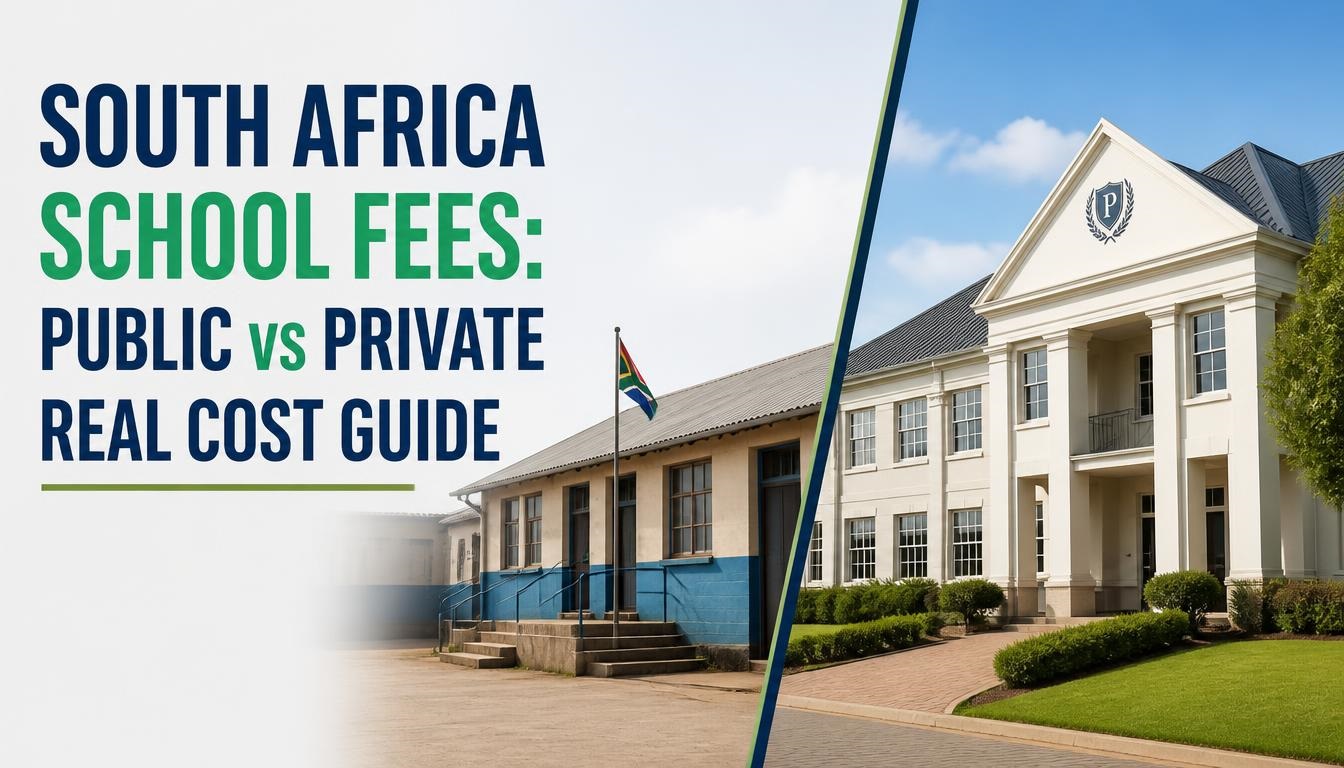
ZAR Price Range: R6,000 – R55,000+/year (Public Exemption to Fee-Paying) vs R35,000 – R275,000+/year (Mid-tier to Elite Private Day).
Top Value Pick: Former Model C Public Schools (e.g., Parktown, Westerford).
Best Budget Pick: Low-Fee Private Chains (e.g., Curro Academy, Spark Schools).
Major Buyer Warning: Beware non-refundable development levies (up to R100,000) and mandatory IEB exam surcharges.
With inflation hovering around 3.5%, South African parents are getting slapped with school fee hikes averaging 5% to 8%. When balancing a household budget alongside soaring food prices, fuel levies, and municipality rate spikes, deciding between a public school and an independent institution is no longer just an academic choice—it is a make-or-break financial commitment.
Many families assume paying R180,000+ per year guarantees a flawless educational path, while others fear sending their children to public schools will permanently put them at a disadvantage. The truth sits squarely in the fine print of local fee structures, unexpected extra costs, and statutory protections under South African law.
1. ZAR Cost Matrix: What You Actually Pay in 2026
The true cost of education extends far beyond basic tuition. Here is how annual fees stack up across South Africa’s primary schooling models, including statutory tax status, typical payment schedules, and underlying value dynamics.
| School Category | Typical Annual Tuition (ZAR) | VAT Included? | Payment Options & Discounts | Core Value & Financial Risk Rating |
| No-Fee Public (Quintile 1–3) | R0 (State-funded) | Exempt | Government subsidized; small voluntary donations | Budget Relief: High operational risks; overcrowding and infrastructure shortfalls. |
| Fee-Paying Public (Quintile 4–5 / Model C) | R18,000 – R65,000 | Exempt | Monthly EFT, Debit Order, 5–10% early settlement discount | Best Overall Value: Strong academic records and sports; risk of rising facility levies. |
| Low-Fee Independent (e.g., Spark, Curro Academy) | R28,000 – R55,000 | Exempt | Monthly Debit Order, PayJustNow, Mobicred | Solid Budget Alternative: Small classes, modern tech; variable sports facilities and extra charges. |
| Mid-Tier Private (e.g., Reddam, Crawford, Curro Select) | R90,000 – R212,000 | Exempt | Monthly Debit Order, upfront annual discount | High Cost Investment: IEB curriculum, advanced infrastructure; high annual escalations. |
| Elite Independent Day (e.g., St John’s, Roedean, Bishops) | R180,000 – R275,000 | Exempt | Termly payments, upfront annual discount | Premium Tier: Outstanding global networks; severe risk of extra fee inflation and high levies. |
| Elite Boarding Schools (e.g., Hilton, Michaelhouse) | R360,000 – R451,000+ | Exempt | Annual/termly lump-sum EFT | Ultra-Luxury: Unmatched facilities; requires top 1% household earnings. |
Fee-Paying Public Schools (Former Model C)
-
Pros: Highly cost-effective tuition rates; world-class sporting facilities at top-tier institutions; protected by the Consumer Protection Act (CPA) and South African Schools Act (SASA) fee exemption provisions.
-
Cons: Class sizes often range between 30 and 40 learners; state budget cuts put pressure on governing bodies (SGBs) to raise voluntary levies; administrative delays in infrastructure repairs.
Low-Fee & Commercial Private Chains
-
Pros: Strict cap on class sizes (typically 20–25 learners); high integration of digital learning tools; reliable security and infrastructure independence during municipal service disruptions.
-
Cons: Limited extramural options compared to traditional Model C grounds; high teacher turnover in rapidly expanding corporate networks; strict commercial collections with zero legal right to SASA statutory fee exemptions.
-
Capital Development Levies: Elite private schools frequently require a non-refundable upfront placement fee or development contribution ranging from R15,000 to over R95,000 simply to secure a seat.
-
IEB Assessment Surcharges: While public schools sit the National Senior Certificate (NSC) via the DBE at no additional charge, Independent Examinations Board (IEB) Grade 12 examination fees add an extra R8,000 to R12,000 per candidate in the final year.
-
Extramural & Travel Costs: Model C and top private schools mandate specialized sports kit, venue hires, and travel fees for regional leagues, which can add R1,500 – R3,000 per term per child.
-
Digital & Textbook Subscriptions: Private chains heavily rely on tablet-based e-learning software, forcing parents into annual software licensing fees (R2,500 – R5,000) on top of physical hardware purchases.
3. Insider Savings & Loyalty Discounts
Navigating educational costs requires treating school fees like a major recurring investment. You can reduce your total expenditure by leveraging specific payment mechanics and loyalty structures:
Local Retailer & Banking Perk Spotlight
4. Real-World SA Reality Test: Infrastructure, Safety & Performance
Living and studying in South Africa brings unique daily operational challenges that impact schools differently based on their funding models.
Off-Grid Independence & Load-Reduction Readiness
When municipal power cuts hit, private institutions generally transition seamlessly to dedicated commercial solar setups or back-up generators, keeping smartboards and Wi-Fi networks online. Public schools, particularly those relying solely on SGB funding, often have to revert to paper-based teaching during power outages, although many are progressively installing basic solar-backup systems through corporate social investment (CSI) partnerships.
Class Sizes vs. Academic Results
While private schools market their 18:1 to 22:1 learner-to-teacher ratio as essential for academic success, matric pass data shows top Model C public schools consistently match or exceed private IEB pass rates and distinctions per candidate. The real differentiator is individual learner support: smaller private classes prevent struggling students from slipping through the cracks unnoticed.
Water Security & Municipal Reliability
Frequent water supply disruptions affect school hygiene and operating hours. Commercial private networks typically invest directly in bulk water storage tanks and borehole filtration systems to stay open during municipal water cuts. Public schools often face early closures during extended municipal water outages, impacting overall teaching hours.
5. South African Consumer Rights & Legal Protections
Public School Exemption Rights (SASA Section 39)
Under the South African Schools Act, parents earning below a specific combined annual income threshold relative to the school’s fees are legally entitled to partial or total fee exemptions at fee-paying public schools. SGBs cannot refuse entry or withhold report cards due to non-payment of public school fees if an exemption application is underway.
Private School Contractual Realities
Independent schools operate under standard commercial contract law. They are not bound by SASA exemption rules. If you default on tuition payments at a private school, the institution reserves the right to terminate the contract, suspend your child from classes, and hand your account over for credit bureau listing subject to the provisions of the Consumer Protection Act (CPA) and National Credit Act (NCA).
6. Local Frequently Asked Questions
Can a public or private school legally withhold a matric report card for unpaid fees?
No. Under South African law, no school (public or private) may withhold a learner’s report card, transfer card, or matric certificate due to outstanding school fees. The school must follow civil debt-collection procedures against the parents directly rather than penalizing the child.
What happens if I can no longer afford private school fees mid-year?
You must give contractual notice—typically one full term’s notice in writing—to avoid penalty fees. Review your contract’s cancellation clause under the CPA, which protects consumers against unconscionable early cancellation penalties.
Are school fees tax-deductible in South Africa?
Standard school fees for mainstream primary and secondary education are not tax-deductible for individual taxpayers under SARS regulations. However, if your child has qualifying disability-related educational expenses certified by a registered medical practitioner, specific costs may be claimed under ITR12 medical tax credits.
7. Community Discussion
What fee increases are you seeing at your local schools this year? Are you considering moving your child from a private institution to a local Model C public school, or vice versa? Share your local quotes, fee structures, and experiences in the comments below!
Disclaimer: School fee rates, levies, and admission terms fluctuate across regions. Figures stated in this guide reflect independent market tracking and published fee structures at the time of publication.

Joseph Mathebula is a consumer analyst and market researcher at Prices in South Africa. He specializes in tracking local service costs, retail pricing, and travel budgets, helping everyday shoppers navigate the market to secure the best value.